The Skills to Succeed Are Changing—How Apprenticeships Can Keep Pace with a Rapidly Evolving World

Apprenticeships offer a vital alternative to traditional academic pathways, helping learners build real-world skills while earning. But there's a growing problem—too many apprentices are dropping out before completing their qualifications.
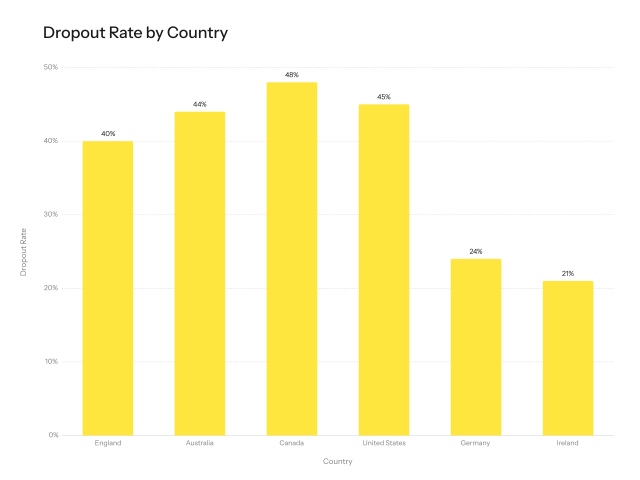
According to the Sutton Trust’s 2025 report A World of Difference 3, around 40% of apprentices in England do not complete their programme. And England isn’t alone — dropout rates are just as high or worse in Australia, Canada, and the US.
At Sainaptic, we believe this is a problem that can be solved—with the help of smart, real-time analytics.
The Dropout Challenge in Numbers
These figures raise serious questions:
- Why are dropout rates so high in English-speaking countries?
- What can we learn from countries like Germany and Ireland, which consistently deliver stronger completion outcomes?
- How can training providers take timely action to support learners before it’s too late?
Common Factors Behind Dropout
The Sutton Trust identifies several key contributors:
1. Insufficient Off-the-Job Training
In England, apprentices often receive less than 6 hours/week of off-the-job training, while countries like Germany require significantly more.
2. Poor Monitoring & Support
Lack of data visibility means providers and assessors may miss early signs of disengagement.
3. Mismatch Between Job Role and Training
Some apprentices feel their workplace duties don’t align with their qualification—leading to frustration and withdrawal.
How Sainaptic Tackles These Challenges
At Sainaptic, we provide training providers and assessors with tools to track, predict, and respond to learner activity. Here's how our analytics platform helps:
Real-Time Insights
Monitor:
- Immediate feedback on submissions
- Training engagement
- Assessment attempts
- Reflection activity
- Off-the-job hours logged
Automated Nudges and Alerts
Our system flags:
- Learners who stop submitting work
- Underperformance in key skills
- Missed deadlines or incomplete training hours
Example Scenario: Amira, a 17-year-old Business Admin apprentice, stops logging reflections for two weeks. Her assessor is alerted by Sainaptic, leading to a quick check-in. They discover she’s struggling with confidence at work. She’s paired with a mentor and re-engages fully—eventually completing her programme.
Cohort-Level Analytics
Compare trends across:
- Providers
- Employer partnerships
- Qualification types
Providers can identify patterns like low off-the-job training across a particular cohort and intervene with specific employers to meet statutory requirements.
The Impact of Smart Analytics
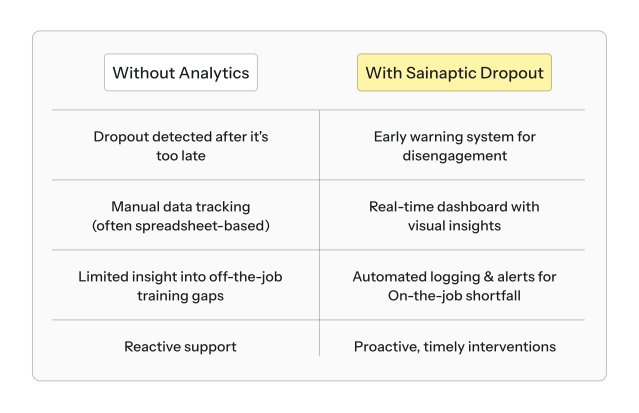
Sainaptic’s AI-driven solutions deliver instant feedback on all submissions—including free-text and multimodal entries—while providing valuable insights into every stage of the apprentice learning journey.
What's at Stake?
Every learner lost to dropout represents:
- Lost economic potential
- Wasted training resources
- A blow to social mobility
But with the right tools and timely insights, we can change the trajectory. Just as schools use data to tailor instruction, apprenticeships need intelligent solutions to personalise support and boost retention.
Final Thoughts
The Sutton Trust has sounded the alarm—apprenticeship dropout rates are too high. But at Sainaptic, we see opportunity in the challenge.
With smart analytics, we can:
- Detect dropout risks before they escalate
- Improve training delivery standards
- Empower providers to deliver more equitable outcomes